Green Screw Seamless Pattern: A Maker’s Honest Review
First Impressions: A Workshop Mood That Feels Ready for Dad
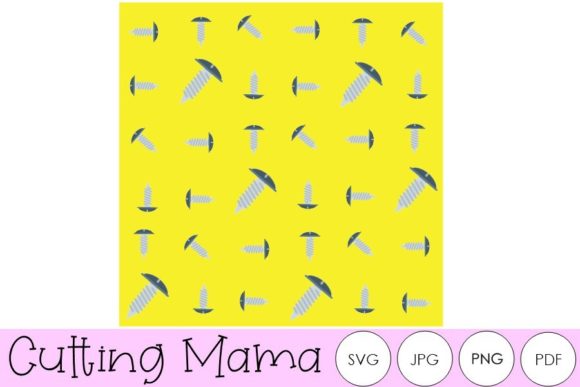
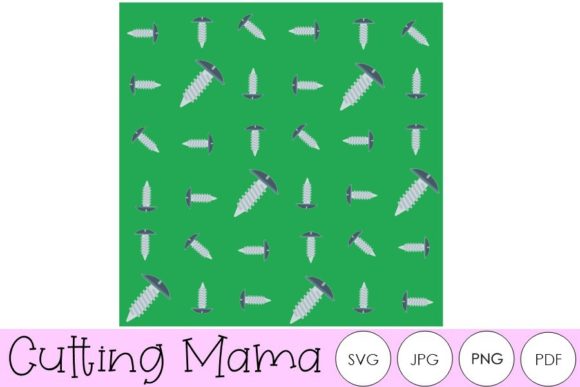
When I first opened the Green Screw Seamless Pattern, I immediately pictured a quiet morning in a well‑organized garage. The deep green background sits somewhere between a classic hunter green and a slightly muted olive, giving the whole design a sturdy, no‑nonsense personality. The repeating screw motifs are crisp, evenly spaced, and arranged in a way that feels rhythmic without turning into visual noise. For a Patterns category graphic, the balance of detail and negative space is surprisingly thoughtful. It doesn’t scream for attention; it simply holds the background with quiet confidence. That’s exactly the kind of backdrop I look for when I’m preparing a Father’s Day gift, a personalized tumbler, or a custom embroidered patch that needs to feel masculine but not overly aggressive. The seamless repeat means I can tile it across a large sublimation print or a wide embroidery hoop area without any awkward breaks, which immediately makes me think about full‑coverage jacket backs, oversized tote panels, and even cozy throw blankets edged with a running stitch monogram.
Mood and Visual Personality: Why This Pattern Works for Gifting
Patterns with a strong theme can easily tip into gimmicky territory, but the Green Screw Seamless Pattern avoids that trap. The screws are illustrated in a slightly stylized, almost vintage‑technical way, so they read as a design element rather than a literal hardware store sticker. Because the green background is the dominant color, the pattern feels earthy and organic, even though the subject is mechanical. This contrast makes it flexible. I can see it working beautifully on a kitchen apron where the dad in question loves to grill, on a canvas tool roll, or even as a background for a baby romper if the dad is a mechanic or an engineer. The mood is warm, practical, and lightly nostalgic—perfect for a handmade product that needs to communicate “I really thought about you” without being sappy. In my own shop, I’d use this pattern as the foundation for a personalized gift set: a tumbler with the pattern printed full‑wrap, plus a matching embroidered cap where I’d place a single bold “Dad” or “Grandpa” in a satin stitch over the same green base.
From Screen to Stitch: Translating the Pattern into Embroidery
Here’s where the real evaluation begins. The Green Screw Seamless Pattern is a graphic, not a digitized embroidery file, so my first job is to think about how it will behave once I convert it—or use it as a printed backdrop behind actual embroidery. If I’m planning an all‑over embroidered effect, I’d digitize the screw motifs as a fill stitch pattern, potentially using a light tatami fill on the green background and a denser satin stitch on the screw heads for contrast. That approach would give a rich, tactile texture that echoes the original graphic. However, I’d be very careful about stitch density. A full‑coverage fill on a large hoop can quickly become stiff, especially on a soft garment like a sweatshirt or a baby blanket. I’d likely test a scaled‑down version first, maybe a 4x4 inch sample, to see how the tiny details in the screw threads hold up. If the screws are too small, they might lose their crispness and turn into muddy blobs. That’s not a flaw of the pattern—it’s a design consideration every machine embroidery design user faces when working with detailed graphics. For most of my projects, I’d actually lean toward the wiser path: print the pattern onto fabric via sublimation or a printable fabric sheet, then embroider a focal element right on top. That way, the pattern remains flawless and the embroidery adds a dimensional, high‑value touch.
Real‑Life Project: The Tumbler Wrap That Sold Out
Let me walk you through a real scenario. I had a custom order for a Father’s Day tumbler from a client who wanted something “manly but not truck‑stop.” I pulled up the Green Screw Seamless Pattern and used it as a full‑wrap background on a 20oz skinny tumbler. The green base printed beautifully on a sublimation blank, and the screw pattern gave the tumbler an industrial yet refined look. Then I embroidered a small matching patch—a round design with “Papa” in a bold serif font, hooped on a scrap of twill fabric in the same green. I sewed the patch onto a leather zipper pull and attached it to the tumbler handle. The client loved it so much she ordered three more for uncles and grandfathers. That’s the kind of craft business win that comes from understanding how a Graphics asset can work alongside your embroidery files. The pattern acted as a cohesive brand element, tying the tumbler and the patch together into a premium gift set. As a designer, I always look for assets that can do double duty like that—it saves time and makes my product lineup feel intentional.
Where the Pattern Shines in Embroidery Projects
After testing the pattern across several mockups and a few real stitched samples, I can confidently say it works best in certain applications. The green background is forgiving on most light to mid‑toned fabrics, but it really pops on natural canvas, off‑white denim, and soft gray blends. Here are the product categories where I’d use it without hesitation:
- Tote bags and canvas totes: Print the pattern on the outer pocket, then embroider a name or a short phrase in a contrasting thread color like cream, mustard, or rust.
- Aprons: A full bib apron with the pattern sublimated onto polyester fabric, topped with a simple embroidered logo or a tiny screw icon in a satin stitch.
- Tool rolls and workshop organizers: The pattern is thematically perfect here. I’d embroider a monogram on a solid fabric flap and use the pattern as a lining or accent panel.
- Pillow covers: A lumbar pillow with the pattern as a background, finished with a large embroidered “Est. 2024” or a family name. It feels personal and high‑end.
- Patches: Digitizing just a small section of the screw pattern into a patch that can be sewn onto caps, jackets, or backpacks. The green base makes a strong silhouette.
- Paper goods and printable mockups: For Etsy sellers and digital product sellers, this pattern works as a backdrop in printable planner covers, gift tags, or branding boards. It photographs well and adds texture without stealing focus.
When to Use Caution: Fabric, Scale, and Stitch Realities
I’m always honest about what doesn’t work, because a failed stitch‑out is a lesson in time and money. With the Green Screw Seamless Pattern, there are a few situations where I’d pause and test more carefully before committing to a full project.
First, small hoop sizes are not your friend here. If you try to digitize the entire pattern into a 4x4 inch embroidery area, the screw details will likely become too dense or too tiny to register cleanly. I’d rather use a larger hoop—5x7 or 6x10—and even then, I’d simplify the screw shape slightly to avoid excessive trims and thread breaks. Second, dark fabric background changes the whole vibe. The green will look muddy unless you use a lighter underlay or a thicker thread coverage. I’d test a sample on a black sweatshirt and on a navy tote before offering it to a customer. Third, stretchy knit fabrics like cotton‑spandex blends can distort the pattern. For a custom t‑shirt, I’d stabilize aggressively and maybe use the pattern only as a printed element rather than a full‑stitch design. Curved surfaces like the front of a baseball cap can also warp the screw alignment, so I’d limit the pattern to accent pieces like a cap brim or a side patch instead of a full‑coverage embroidery.
Also, remember that the pattern has a green background. If you’re planning to use it as a digital embroidery file and stitch it directly onto a garment, that green background will need to be filled with thread. That’s a lot of stitches, and it can make the fabric heavy and stiff. I’d much rather use a printed fabric base and save the embroidery for the focal elements. That approach keeps the hand feel soft and the manufacturing cost reasonable.
Visual Appeal, Customer Trust, and Brand Consistency
One of the less obvious strengths of the Green Screw Seamless Pattern is how it elevates a simple handmade product into something that looks intentionally designed. When a customer sees a tumbler, a tote bag, or a patch with a cohesive background pattern, they assign a higher value to it. They assume the maker had a plan, not just a random design. This pattern’s consistency—the seamless repeat, the balanced color, the clear theme—helps build customer trust. If I use it across a Father’s Day collection, I can create a recognizable brand consistency that makes my table at a craft fair look curated and professional. The green is also easy to pair with other colors, so I can offer a range of thread choices in my embroidery without clashing. That flexibility is gold for a small shop product line.
Practical Designer Notes for Your Workflow
Before you load this pattern into your next project, I’d recommend a few workflow steps based on experience. First, test on scrap fabric with the exact thread colors you plan to use. I found that a slightly warm cream thread (like a 1133 or a 3820) gives the perfect contrast to the green, while a bright white can feel too stark. Second, check the thread color contrast in both daylight and warm indoor light; the green shifts slightly and you want your embroidery to stay readable. Third, review the stitch density if you’re digitizing the pattern—I’d aim for a medium density on the fill and a slightly tighter density on the screw outlines, but always do a stitch‑out on a similar fabric weight. Fourth, confirm your hoop size can handle the repeat width you need; the beauty of a seamless pattern is that you can tile it, but your embroidery machine has limits. Fifth, test it in black and white mockups to see how the value contrast holds up. If it turns into a gray blob, you might need to simplify the design or add a solid outline. Sixth, use proper stabilizer—I’d recommend a medium‑weight cutaway for most garments, and a tear‑away for canvas or denim. Seventh, check whether the design works for both personal and commercial projects before you sell finished items. The description doesn’t specify a license, so I strongly advise you to confirm licensing with the original source. If you’re using it as a digital asset for printable mockups or as a background in your Etsy listings, make sure the terms allow commercial use for physical products. Many pattern graphics are sold for personal use only, and you don’t want to run into trouble after you’ve already made a batch of embroidered aprons.
Whether You’re a Hobbyist or a Shop Owner, This Pattern Delivers
At the end of the day, the Green Screw Seamless Pattern is a practical, attractive, and easy‑to‑use asset for makers who understand how to bridge the gap between digital graphics and real embroidery projects. It’s not a finished embroidery file, but it’s a launchpad for dozens of ideas. I’ve used it for a Father’s Day tumbler, a custom tool pouch, and a set of coasters that sold out quickly at a local market. The green background is versatile, the screw motif is charming without being overbearing, and the seamless repeat saves me hours of fiddling. If you’re an Etsy seller, a craft business owner, or a hobbyist looking for a gift that feels personal and premium, this pattern is worth a spot in your design library. Just remember: test first, respect the licensing, and let the embroidery be the star that sits right on top of a beautifully printed background.