Fishing Skeleton: A Distinctive Graphic for Niche Branding
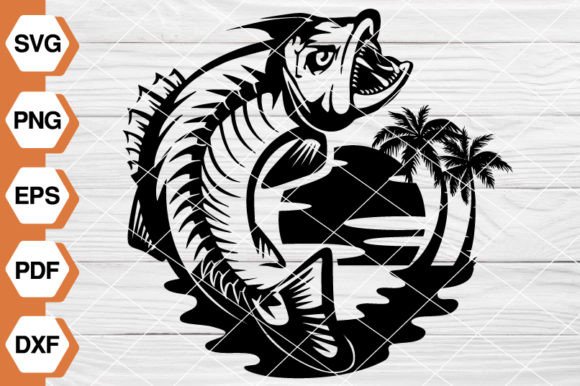
When a new illustration lands on my desk for a potential client project, my first evaluation is always about the mood. Opening the “Fishing Skeleton” graphic asset, the immediate impression is one of rustic character with a touch of macabre charm. This isn’t a generic, cheerful clipart; it’s a specific style piece that feels welded together, both literally in its design and metaphorically in its thematic cohesion. It speaks to a niche audience—think outdoor enthusiasts, fishing brands, rustic lifestyle products, or even a boutique with a darker, adventurous aesthetic. For a designer, this first glance tells me it’s a graphic design asset with strong personality, ready to anchor a visual concept that needs to feel authentic and handcrafted.
The Right Project for This Unique Illustration
In practical terms, this Fishing Skeleton illustration naturally fits projects that lean towards the handmade, the outdoors, or a certain rebellious authenticity. Imagine conceptualizing for a small business crafting artisan fishing lure boxes, a local microbrewery launching a “Dark Waters” ale, an Etsy shop selling hand-printed apparel for anglers, or a seasonal campaign for a hunting and fishing outfitter. Here, the asset becomes more than decoration; it supports a design direction. It can improve the visual mood by injecting a raw, textured element that feels more polished and intentional than a stock photo might. For a boutique product line, this could be the key decorative accent on a label, making the product feel unique and directly connected to its community.
Where This Graphic Asset Excels in Real Design Work
In real design situations, the strength of such a distinctive piece lies in its application as a focal point or a defining texture. For logo design or brand identity for a suitably niche client, a simplified version could serve as a memorable mark. In packaging design, it would work wonderfully as a large, detailed graphic on a tin or box, or as a repeating pattern on paper wrap. For marketing visuals like posters or flyers for a fishing tournament or rustic event, it makes a compelling hero graphic. In the realm of printable designs and merchandise—t-shirt design, mug art, tote bags, or sticker design—its high-resolution detail ensures quality when printed on anything from fabric to ceramic. As a digital design asset, it’s ready for social media graphics, serving as a bold centerpiece for Instagram posts or Pinterest pins promoting a themed collection. The included SVG file means it’s perfect for Cricut projects, allowing crafters or small businesses to create precise, scalable physical products.
Potential Pitfalls: Using This Asset With Care
However, a designer must also judge where an asset should be used carefully. The intricate, welded detail of the Fishing Skeleton means it can lose its impact and become visually noisy at very small sizes. Avoid crowding it in complex layouts with too many competing elements. On low-contrast backgrounds, some finer lines might vanish. This isn’t a graphic for minimalist branding or professional corporate materials where clean visual hierarchy is paramount; it’s an emotional, style-driven piece. For projects requiring supreme readability, this illustration should play a supporting role, not carry the main text information.
Impact on Brand Perception and Professional Results
Integrating such an asset affects a project’s core qualities. For readability and hierarchy, it demands a clear primary position or a background treatment that lets text shine over it. For brand consistency, it can become a powerful recognizable element if used consistently across a campaign—from the website graphics to the product mockups. It builds visual trust and emotional appeal with a specific audience by feeling genuine and unpolished in the right way. This directly boosts audience engagement for that niche. The overall impression it lends is one of targeted professionalism; it shows the client understands their audience’s visual language, which is far more effective than using generic, safe imagery.
A Designer’s Practical Checklist Before Client Use
Before committing this graphic to a real client project, I run through a standard set of checks. First, test it in black and white to ensure its forms hold up without color. Check contrast by placing it on both light and dark backgrounds in your layout software. Crucially, preview it at the actual sizes you’ll use—both tiny for a web icon and large for a poster. Place it on real product mockups to see how it interacts with materials. If print is involved, test the print quality using the high-resolution files; the PDF or EPS are often best for this. Review all provided file formats: the PNG with transparency is ideal for quick digital overlays, the SVG for infinite scalability and editability in vector software, and the DXF for specialized cutting machines.
Font pairing is key. Compare the illustration with various font styles. A sturdy sans-serif might balance its rustic detail, a rough script font could enhance its handmade feel, while a clean serif could create an interesting, editorial contrast for blog visuals or editorial design. Finally, confirm the commercial license. For use in client work, Etsy products, or print-on-demand businesses, you must ensure the asset is cleared for commercial design use. This due diligence turns a creative marketplace download into a reliable, professional design asset.
Beyond the Download: A Versatile Creative Tool
The promise of an instant download with multiple welded-together files is about utility. This Fishing Skeleton graphic becomes a versatile tool in a designer’s kit. It’s not just a clipart; it’s a scalable foundation for sublimation design, a ready element for Canva templates, a precise cut file for a Cricut project. It allows a designer, brand owner, or content creator to move quickly from concept to execution, whether that’s digital ads or printable wall art. For a small business branding project, having such a strong, ready-made visual can elevate the entire creative process, providing a cohesive centerpiece that makes the final result feel considered and complete. In the end, an illustration like this is judged not by its file list, but by its ability to solve a specific visual problem with character and quality, making the designer’s job—and the client’s project—more effective.